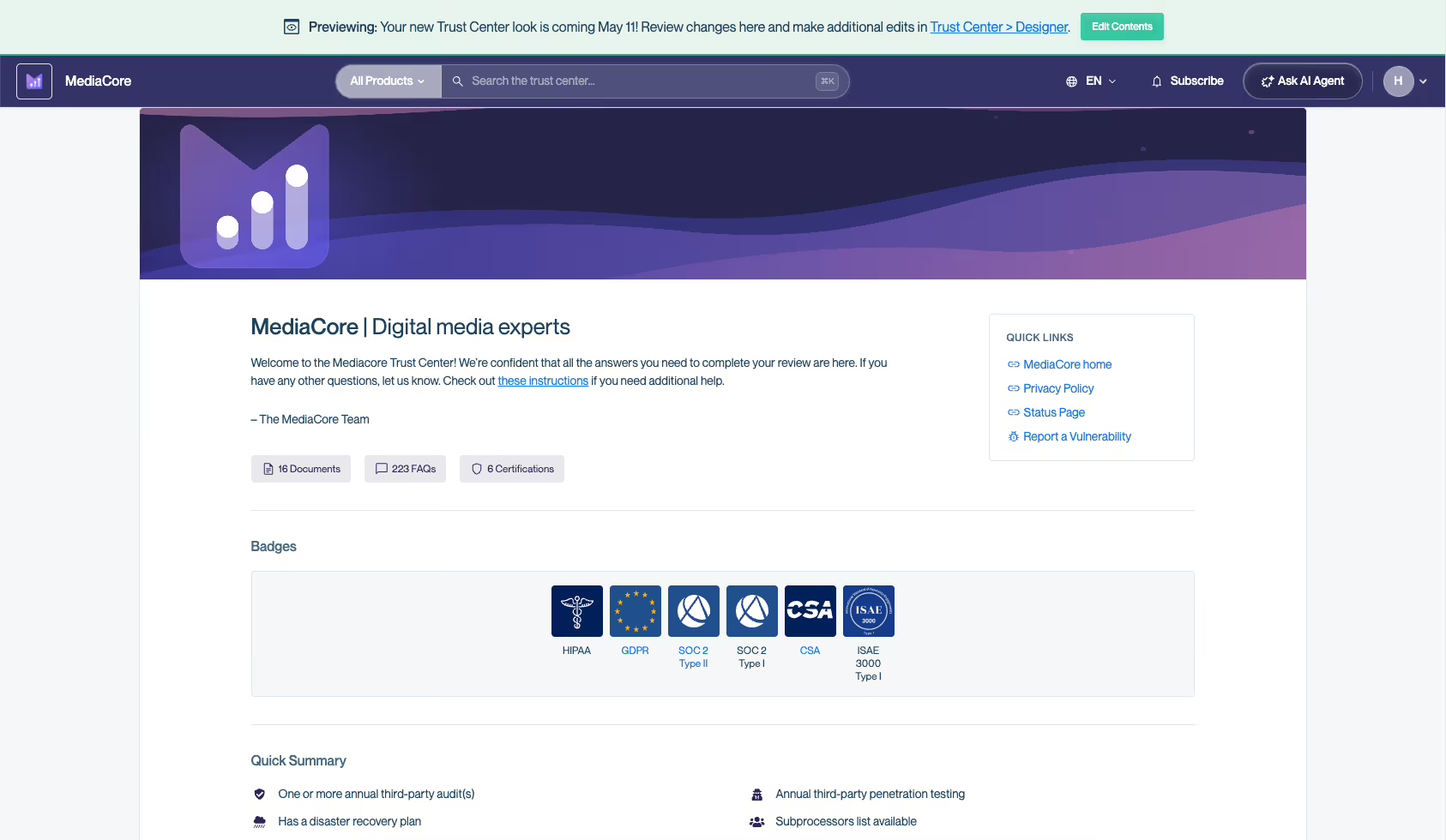
Trust Centers exist to answer one question: does this vendor meet our security requirements?
When the answer takes more than a minute to find, the reviewer gives up and sends an email. That email lands in your security team's queue, gets triaged, gets answered manually, and adds days to a review that should have taken seconds. Multiply that by every prospect, every renewal, every TPRM cycle, and it adds up to real time your team isn't getting back.
This is the lens we used to redesign the Conveyor Trust Center, which launched on May 11. The goal isn't a prettier page (even though we think it's an upgrade!). It's fewer emails.
Technical details about what's changing →
Touchless is our north star
A visitor should be able to land on your Trust Center, find what they need, get their questions answered, and finish their review without contacting you. Every follow-up email is a signal that self-service didn't work hard enough.
Before we changed anything, we wanted to know where we actually stood. We started with a single statement and asked TPRM professionals to rate how strongly they agreed on a 1–5 scale after viewing a Trust Center:
"I can get what I need quickly and without friction from a Conveyor Trust Center."
The average came back at 3.3 out of 5. Not bad. But not the experience we want your customers to have when they're reviewing you.
From there, we ran in-depth interviews across three groups: Trust Center admins, TPRM visitors doing real reviews, and internal stakeholders. Participants came from companies ranging from mid-market SaaS to large enterprises with thousands of active vendors under review.
Each session followed the same structure. Explore two interactive prototypes, complete real tasks (find a SOC 2 report, confirm encryption, locate an NDA), then sort 11 proposed features into "excited," "neutral," or "scared" buckets.
A few things came through clearly:
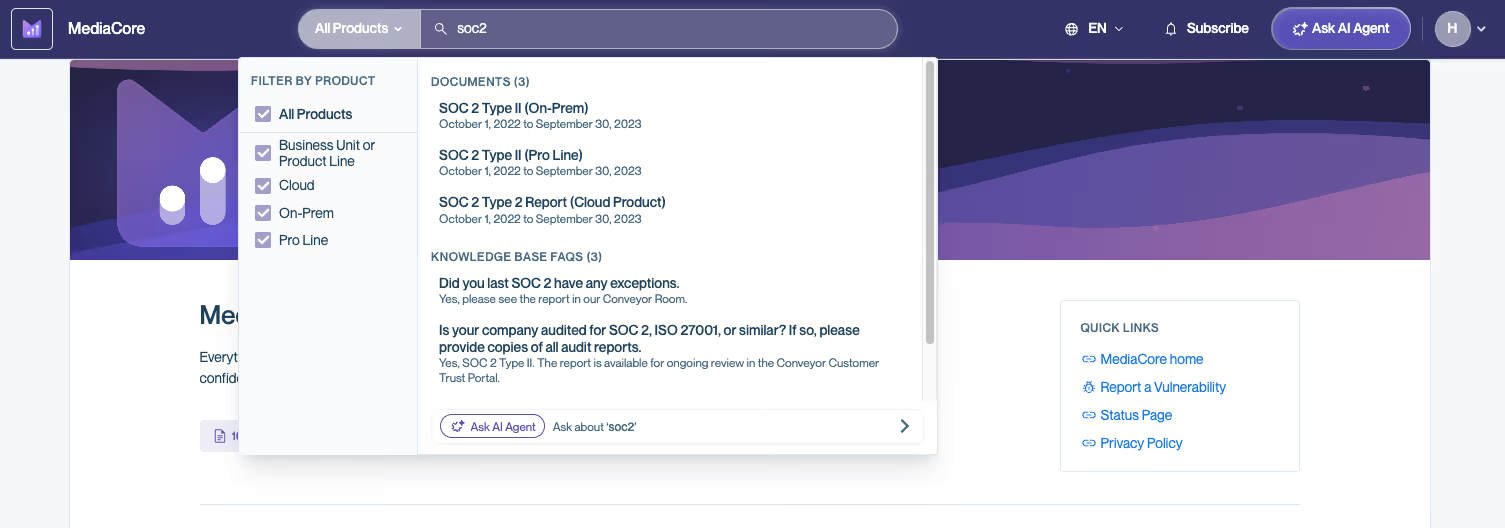
Search needs to be the first thing on the page. 100% of participants — admins and visitors alike — were excited about a search bar in the header. The old pattern was: scroll past banners and marketing copy to find a "Find an Answer" section. Time was wasted on every visit.
Product line filtering matters more than we realized. Over 80% of participants were excited about filtering by product line. One admin told us their sales team had been manually sending zip packages organized by product because the Trust Center didn't support it well. A TPRM reviewer at a major tech company said sorting through reports to figure out which product they apply to was one of their biggest frustrations.
Information density beats hero imagery. People skip past marketing copy to get to the functional parts of the page. We tested two layout directions — open and card-based — and both performed well in research. We optimized for the open layout because it surfaced content fastest.
Mobile is not optional. Trust Centers get shared over Slack and pulled up on phones. Sales and support teams had been flagging this as a real gap. If it doesn't work on a small screen, it doesn't work.
And one finding that gave us confidence to move quickly: zero participants placed a single feature in the "scared" bucket. Multiple admins said they'd be fine if we rolled out the changes tomorrow.
What's new?
- Global search in the header. Works across documents, Q&As, and Trust Center content. Product line filtering is built in.
- Cleaner navigation. Search, profile, and the AI agent are immediately within reach.
- A dedicated user menu. Custom documents, signed NDAs, and completed questionnaires live in one place instead of taking up prime real estate.
- A more open layout. Less scrolling, more content visible on entry.
- Mobile support. The new layout adapts to whatever screen it's viewed on.
What we're watching
We're targeting a shift from that 3.3 baseline toward a 4.0 post-launch. We'll be watching search usage, visitor satisfaction, and whether reviewers can complete their review without sending a follow-up.
This update is the first step toward agentic Trust Centers. More is coming, and we'll keep building it the same way: talk to real users, measure what matters, ship what works.
Trust Center improvements go live May 11, 2026. All existing Trust Centers update automatically. Learn more about what's changing →
.png)

-p-1600.avif)