Enterprise buyers are more security-conscious than ever, and the pressure that creates lands squarely on your team. You know exactly how this goes. A prospect sends a 300-question security questionnaire, and suddenly your GRC analyst is digging through Confluence, pinging the legal team, and piecing together answers manually. The deal stalls, and your support team gets pulled in. What should be a trust-building moment turns into friction that damages the customer experience.
As buyer scrutiny rises, these requests are increasing in both volume and complexity. More potential customers are asking deeper questions earlier in the sales cycle, because their risk exposure and fear of a data breach are higher than ever.
AI is changing how leading teams respond. Instead of reactive, manual work, they're building intelligent systems that automate responses and scale trust-building across every customer interaction, without sacrificing accuracy. Building customer trust is no longer simply about compliance. Done right, it accelerates deals, strengthens customer relationships, and directly impacts your bottom line.
What is a customer trust program and why do CISOs need one?
A customer trust program is how your organization communicates its security posture to prospects and customers. It connects strong internal compliance work with the external workflows that buyers rely on to make decisions replacing one-off fire drills with repeatable processes, centralized knowledge, and clear ownership of customer-facing security. Without that structure, even mature security programs break down under real-world sales pressure.
Why most security teams get stuck
Most security teams were built for internal engagement like focusing on controls and compliance frameworks, not the security questionnaires and ongoing customer-driven requests that come with selling to enterprise buyers. So, they become reactive.
As security reviews slow deals, they create internal bottlenecks and frustrate both sales teams and buyers. In fact, Conveyor’s 2024 State of Security Review found that revenue teams spend an average of 3.1 weeks per security review per deal, and 52% of deals are delayed “sometimes” or “often” due to security review.
At the same time, trust is becoming harder to establish. According to Sophos’ 2026 Cybersecurity Trust Reality Report 95% of organizations don’t completely trust their cybersecurity vendors. Worse still, 79% find it hard to evaluate whether a vendor is trustworthy or not.
The rise of Customer Trust teams
To solve this, many organizations are building dedicated Customer Trust teams within InfoSec or GRC. These teams sit directly in the sales process, joining prospect and customer calls, answering deep technical questions, and supporting high-value deals at critical stages. Done well, they turn security into a revenue enabler, not a blocker.
But that's rarely how it plays out in practice. Instead of focusing on the strategic conversations that actually move deals forward, most Customer Trust teams spend their days answering the same questionnaire on repeat, hunting for documentation that may or may not be current, and manually keeping their trust center content from going stale. The work is necessary. It just shouldn't require a person to do most of it.
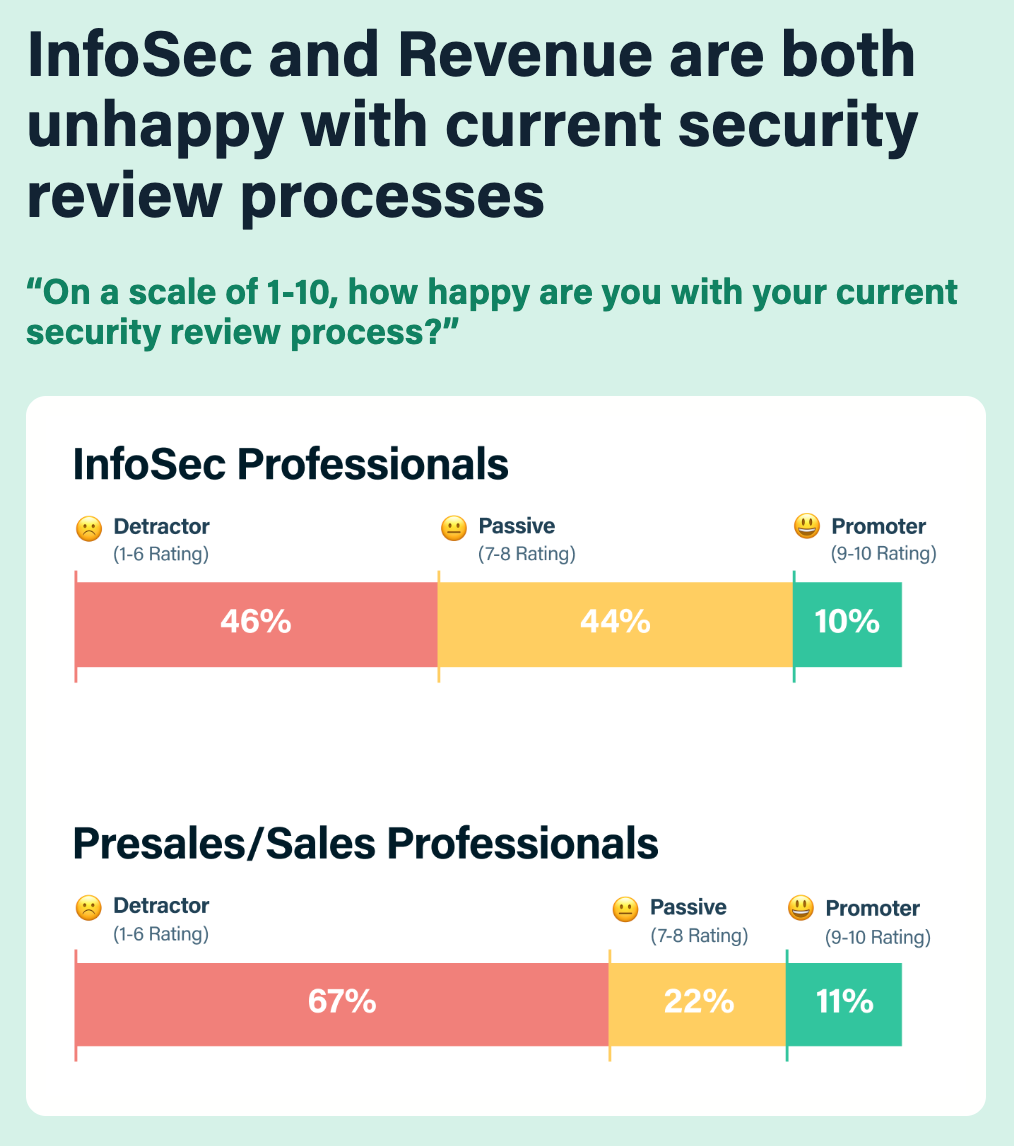
That gap between where these teams should be spending their time and where they actually are is reflected in the numbers: Conveyor's 2024 review found that only 10–11% of InfoSec and sales professionals are satisfied with their current security review process.
The problem is that teams are expected to move faster, but their workflows don’t support it.
How AI changes the model
This is where modern customer trust programs shift. Leading organizations are moving from manual, reactive processes to AI-powered systems that scale trust delivery.
Rather than manually responding to every request, these systems can:
- Help customers find answers and documents inside a Trust Center
- Automate customer access to a Trust Center through integrations with existing systems
- Understand incoming security questions and pull accurate answers from approved documentation
- Give sales a place to search for answers they need so they’re not relying on infosec
The impact is material. Platforms like Conveyor report an 80% reduction in manual effort, as well as 90% faster turnaround times and 95%+ accuracy based on approved documentation. This frees teams to focus on high-value conversations and customer relationships.
Essential components of an effective customer trust program
Most programs have their intent in the right place. But they fail because they can’t scale. The difference between a strong customer trust program and an unsuccessful one comes down to three things: structure, automation, and measurement.
1. Centralized knowledge that stays current
You need a single source of truth for security documentation instead of scattered files, outdated answers, or tribal knowledge. High-performing teams today use AI-powered, self-healing knowledge libraries that are managed by an AI Librarian. This helps to:
- Keep responses aligned with approved customer data
- Flag outdated content before it reaches potential customers
- Ensure consistency across every customer interaction and security questionnaire
This protects customer trust and strengthens your brand reputation.
2. Automated workflows that remove manual work
The fact is that manual processes slow everything down. Modern programs use automation and AI to:
- Automatically grant access to the Trust Center based on CRM records
- Review and communicate with sales requesting questionnaires to be completed
- Generate answers to entire questionnaires
- Help customers with questions in the Trust Center
- Route new questions to the right expert
- Track SLAs and response times
This improves customer experience, reduces friction for your support team, and helps meet rising customer expectations.
3. AI agents that scale trust delivery
AI gives your customer trust program the capacity to scale, and free your team up to focus on high-value customer relationships, instead of repetitive tasks. AI agents help you achieve that by actively doing the work of interpreting incoming questions, generating accurate, evidence-backed responses, and learning from past answers and customer feedback.
4. Trust metrics and measurement systems
AI agents give you something that’s harder to track with manual workflows: a clear line between your team's output and revenue impact. That’s why you should focus on metrics that connect trust to revenue:
- Response time and SLA performance
- Impact on deal velocity
- % of process that’s automated
- Questionnaire deflection rates
- Time spent on strategic vs manual work
These are the indicators that drive customer satisfaction, improve retention rate, and support long-term success.
5. Cross-functional team structure and governance
Customer trust touches InfoSec, GRC, Sales, Legal, and Product. AI agents can automate the work, but without clear ownership around them, inconsistent answers and outdated information end up reaching potential customers.
To fix this, you need to define:
- Ownership of content and approved customer data
- Clear escalation paths for complex requests
- Approval workflows across teams
- Guardrails for AI vs human review
That way, you’ll keep customer support consistent, improve customer experience, and protect customer trust at scale.
Building your customer trust program foundation
As AI reshapes how organizations handle customer trust, the first step isn’t tooling. It’s structure. You need to know who owns what, how decisions get made, and how information flows across teams.
1. Stakeholder mapping and ownership
Your customer trust program spans Sales, Presales, Legal, Compliance, Product, and Infosec teamsWhen a questionnaire lands, there should be no ambiguity about who it belongs to.
Who owns the answer? Who approves it? Who keeps it current?
Without that clarity, teams default to chasing answers, duplicating work, and sending inconsistent responses across customer interactions. However, by building your trust program foundation, you can protect customer trust and avoid delays that impact the customer experience.
2. Selecting AI-ready technology
Next comes technology selection, and this is where the landscape has shifted.
You’re no longer just evaluating workflow tools, but choosing systems that can reason over your security documentation and respond dynamically.
The difference is simple:
- Static systems store answers
- AI systems understand and generate them
When looking for tools, look for ones that can interpret intent, adapt responses across formats, stay updated easily, and improve over time. If they can’t, your team stays stuck in manual work.
3. Maintaining a dynamic knowledge base
The implementation challenge that derails most early efforts is knowledge base maintenance.
Your security posture doesn’t stand still. Certifications change. Controls evolve. Infrastructure updates.
Without a clear process to update your knowledge bases, your content becomes outdated, which breaks trust.
To make it easy on your team, define clear ownership roles, make sure whatever tool you use can sync with external sites and other tools that are already regularly updated and also factor in recency to answer generation, and find a system that will flag outdated information before it reaches potential customers.
4. Proactive security communication and reporting
The best customer trust programs don’t wait for prospects to ask security questions. They answer them before they’re raised, and that’s exactly what buyers actually care about. According to PwC’s Trust in Business Survey, protecting data and responding quickly to concerns are among the top drivers of trust.
Leading teams act on that insight by communicating upfront and sharing updates on certifications, controls, and risk posture before buyers need to ask. As a result, security shows up earlier in the process as a signal of reliability, improving customer engagement and building confidence faster.
5. Customer-facing security certifications
Your trust center and documentation are important, but buyers still look for independent validation in the form of SOC 2, ISO 27001, HIPAA, and PCI DSS. That’s why you should make them easy to access and share, and connect them to your trust workflows.
Used well, they validate your security posture and strengthen customer relationships and support decision-making, while reinforcing your brand reputation.
Implementing trust-building strategies that drive results
Once the foundation is in place, execution is what separates functional programs from those that actually scale.
This is where most teams stall. The structure exists, but daily workflows still rely on manual effort, slowing responses and making it harder to meet customer needs at speed. Trust center automation software is the best way to overcome that challenge.
Start with intelligent automation where it matters most
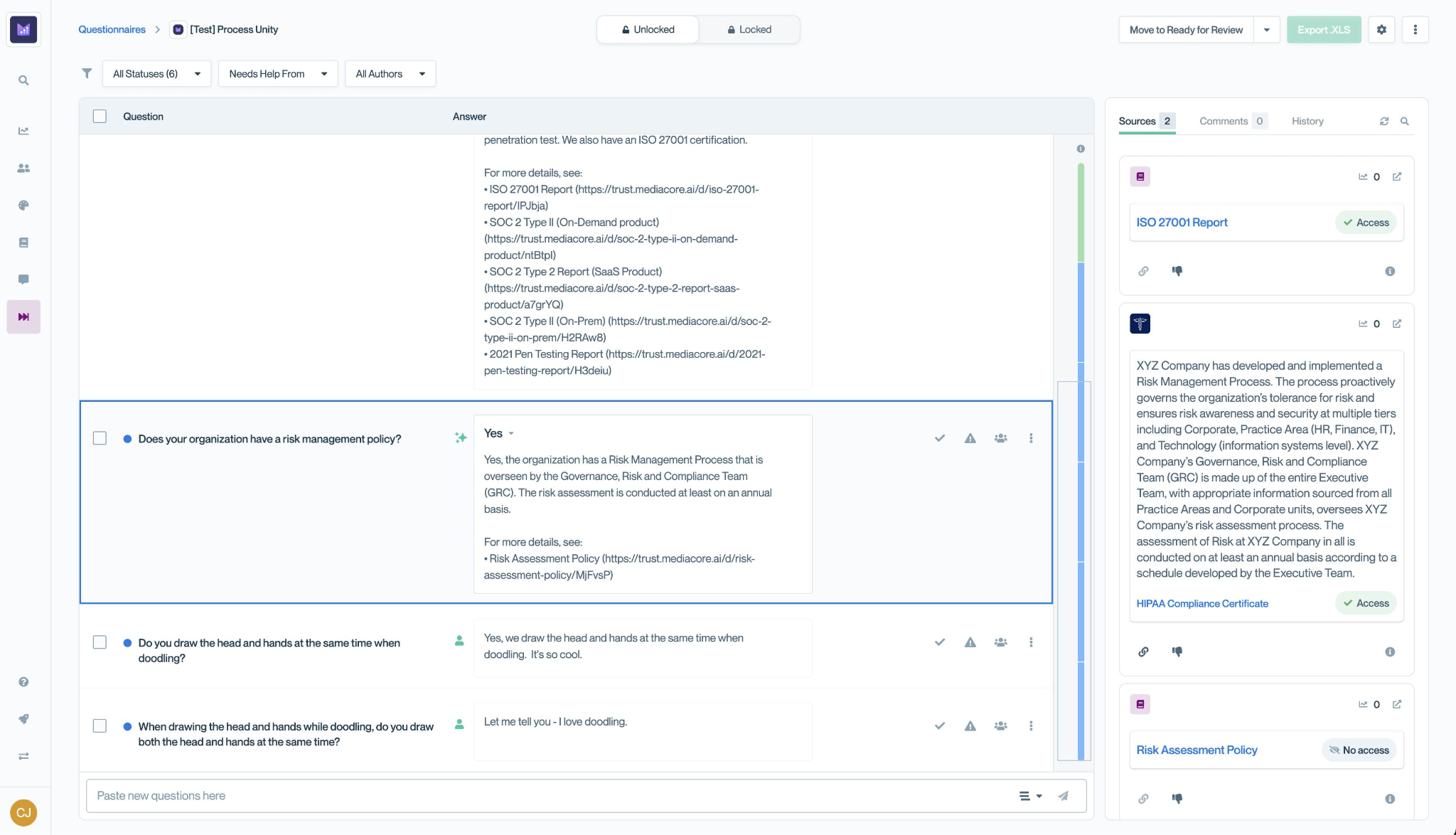
Your team shouldn't be copying and pasting answers into the 47th questionnaire this month. Manual responses don’t scale at volume, which is why leading teams use AI to draft questionnaire answers based on policies, documentation, and past responses. This allows your teams to respond faster and more consistently across both new customers and existing customers.
That way, you provide reliable, excellent customer service at scale, without increasing workload.
Build feedback loops that improve your knowledge base automatically
Every response should improve the next one. When new questions are answered or policies change, that knowledge should feed back into your system automatically. Over time, this creates a stronger, more consistent foundation that reduces friction for new customers. It also ensures your answers stay aligned with real customer needs, not outdated assumptions.
Move toward "agentic" systems
The next step is moving beyond support tools to systems that actively handle requests. Rather than manually managing every questionnaire, AI agents can interpret requests, generate accurate responses, and route exceptions when needed. This removes bottlenecks and allows teams to focus on resolving complex pain points and building trust where it matters most.
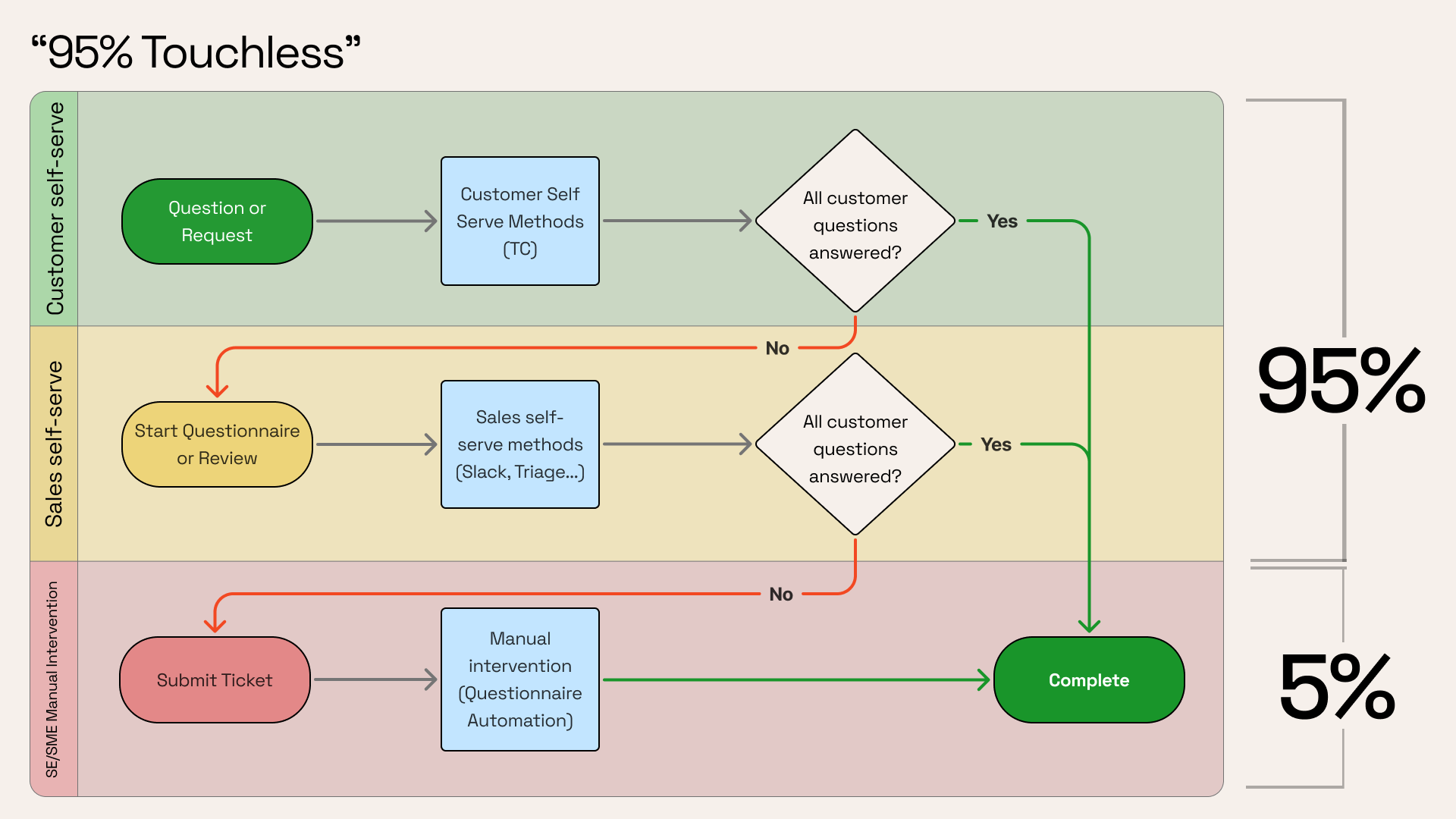
If you look at the chart below, teams are moving towards a workflow where the AI or system can handle 95% of requests and only 5% of the remaining requests get escalated.
Over time, that consistency drives:
- Stronger customer loyalty and brand loyalty
- Higher customer retention
- More referrals and expansion within your customer base
And ultimately, more stable, long-term relationships with loyal customers.
Measuring and optimizing your customer trust program performance
Building the program is one thing. Proving it works is what gets buy-in. If you can’t show impact, security stays a cost center. If you can, it becomes a driver of revenue, customer retention, and brand loyalty.
Focus on metrics that connect trust to outcomes:
- Response time and deal velocity: Track time-to-first-response and how it affects sales cycles. Faster responses reduce friction for new customers and improve conversion across your customer base.
- Revenue influence: Measure how many deals require security review, how many stall, and how improvements change outcomes. This is where trust directly impacts growth and referrals.
- Team efficiency and capacity: Track hours saved on repetitive work. That time should shift into strategic conversations that strengthen customer relationships and support long-term relationships.
- Customer satisfaction and trust perception: Survey buyers after security reviews. Strong results here correlate with satisfied customers, repeat business, and higher customer loyalty.
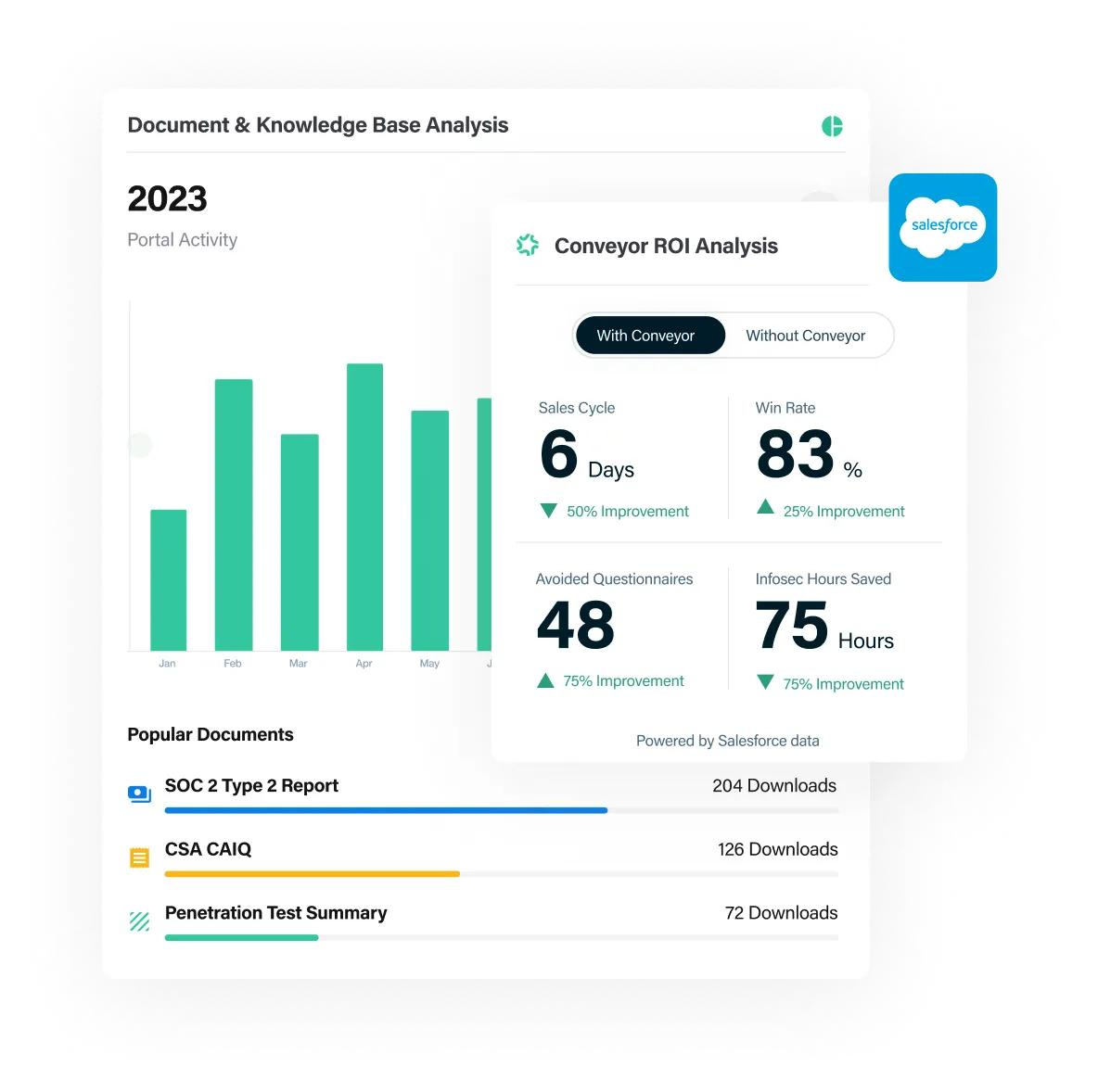
Stop stitching together spreadsheets. You need real-time visibility into bottlenecks, response performance, and where workflows break down. That makes it easier to fix pain points, improve customer experience, and deliver more consistent customer support.
This is where platforms like Conveyor push the category forward.
By combining AI-driven automation with built-in analytics, teams can:
- Track performance across every customer interaction
- Improve accuracy and consistency at scale
- Prove how faster responses lead to better outcomes
The result is stronger customer trust, more loyal customers, and measurable impact on your bottom line.
Ready to transform security into a revenue driver? See how a modern customer trust program can accelerate your sales cycle. Book a discovery call with Conveyor today.
.png)

-p-1600.avif)